Stephen Kasner:
Watches of the Night
All art is the chronicle of a haunting, in the same way that every narrative is at least in part a ghost story: Through
sudden surprise or gradual recognition we begin to remember something of the origins of our strange lives,
bounded and dwarfed by the towers of an eternity from which we are only briefly exiled. The whole broad sea of
time is our true home, the deeps from which we have lately made our way onto a strand of present moments.
There is a strain in contemporary American art that seems haunted as much by the future as by the past – but
haunting knows no tense, and it’s more that history has changed its flow; we’re all at a bend in the river. Floating on
the water are petals of flowers with an unfamiliar scent, different from any we know; blazoned in the sky are marvels
glimpsed in moments of elation or despair. Maybe those who believe the earth is hollow, that the sky is a shadow on
a bowl, know something that reason cannot.
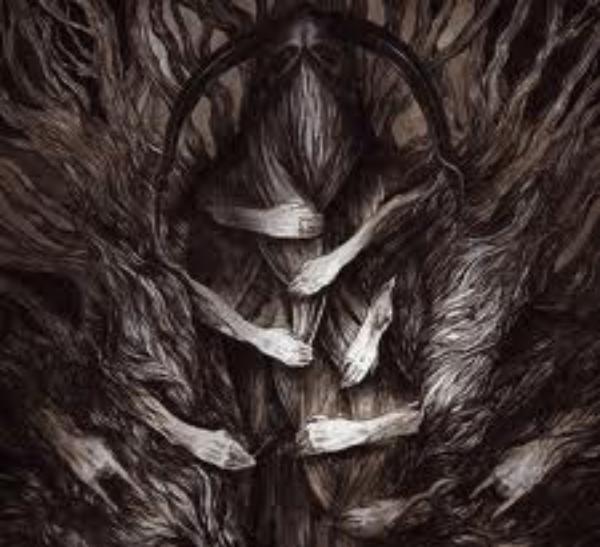
Stephen Kasner’s paintings are like skeleton keys to a room beyond that sky, where the children of the beginning
wait for the real to come home again. A visual poet, he uncovers, rather than depicts, eternal figures stamped in the
mind before it became flesh, engraved like a song in the howling grooves of each human fate. Kasner recalls, and
helps us to recall, what it is to be enchanted, cursed, paralyzed, enthralled, what it is to be a child and discern the
cracks and wounds in the world.
One underlying use for narrative as a web-like logical structure is to bind and sooth those wounds of everyday
experience. But I would like to talk about the ways that Kasner’s art aims to be both the gauze and the wound, the
comment and the thing itself. His imagery persists beyond process, so that the various methods and materials of art
making become less like tools of depiction and more like the prodding of sharp instruments. They search for a kind
of pain that lies at the edge of pleasure and is the living skin, the nerve of a reality that underlies all searching,
journeying, storytelling. They find this breathing, suffering, reality suspended still in a torn web of fairy tale and
nightmare.
Often Kasner shows us only the head of a nameless songbird, a dark, round, sleek shape, damp with the fog that
surrounds it. Its beak tends to be curved, like a crescent moon. One ink drawing is titled Self Study and reveals a
being with this typical bird visage. It is seated facing the viewer’s left, a gown with multiple scalloped edges billowing
below the waist. A disembodied hand crawls up its shoulder and a nervous haze of overspray spreads through the
space behind the figure, like smoke.
As in many of Kasner’s paintings and drawings, there are curtains framing this snapshot-like study of sudden
presence. We are privileged to attend a drama conducted by the night itself, in which we are instructed in the
language of certain forces. They flicker, personified, fluttering like the flags of an extinct army, shaking their severed
limbs, half dissolved by starlight and damnation.
Kasner travels to remote areas of the mind. There are things he provides for himself and the viewer for these
journeys into and out of the painted surface; though they are neither supplies nor companions, but are as much
discovered as carried -- things found, persons searched for, testimony refined with each successful journey:
There are those birds, for instance, sleek and black as the tide; sometimes just one appears, as a familiar; at other
times a flock swirls around an enigmatic light.
There is a vessel, a vortex spinning the stars like a vase spewing flowers; or like the pox of a beautiful disease.
And the flowers themselves — not flowers as we know them but beautiful abrasions rubbed into the inks of time,
proffered by shadow.
The Man appears at certain key moments, whether priest or devil, goblin or a face to the great, devouring Vortex ;
he serves as an emblem of all presence.
And occasionally there is a glimpse of the Woman, a mutable shape caught between lights, the penumbra of desire.
I’ve walked in cemeteries all my life, mindful of the dead waiting for the universal clock to wind down or break, just a
few feet underground. Planted at intervals in the close-shorn grass, headstones protrude in long rows or orderly
family groups. Everywhere I step across the shards of biological machines that once were self-contained worlds; that
were myself.
Near the Cleveland Institute of Art where Kasner studied in the early 1990’s, the curving roads and footpaths of
Lakeview Cemetery gradually wind up the gentle slope of a great escarpment, high above the level plain of the city.
Designed during the last half of the nineteenth century, Lakeview is an idyllic garden for the dead, a park with
enormous tulip trees rising from patches of ivy, with hoary wild plum here and there and sometimes patches of bare
earth in dry seasons, where groundskeepers left a pile of oak leaves too long past autumn. If on a sunny day a
visitor’s attention wanders, it’s possible to become quickly, completely lost. Paths curl around obelisks like a game of
snakes and ladders and one mausoleum looks much like another.
Those little temples, as abstract in their way as a child’s picture of a house, fascinate me. A product of slightly
crazed human industry as ancient in origin as our oldest stories and tombs, they’re real places for transcendence to
lay down its immaterial head. As I stroll I wonder what it would be like to live in one, or at least to be lost for a day in
the maze of paths and little hills and ranks of stone, and find an open mausoleum, or break open one of the century-
old locks and let myself in; I would rest on the bench-like marble slabs covering the dead. Finally I walk up to one
and peer in, put my nose against the grating that protects the glass and catch my breath as I dare another face to
look back at me.
Kasner’s paintings can be like that. Something lurks in the far corner of a dark room, obscured by reflections and
the haze of our own breath. Or are these the mediums that animate it? The artist provides us with layers to look
through, dimensions to sift so that we have a better chance of seeing what he means us to see. Even in those works
where the figurative elements are most obscure, the underlying source of their unusual power is always an
intimation of that presence, that immanence of power and personality. This is not a matter of depicting anybody in
particular, since Kasner is not telling any particular story. It’s close to the truth to say he is being this story, if
anything, and his paintings are pockets in the garment of everyday life, hidden among the folds of normal events,
where heightened perceptions can be kept safe from change and loss. Immanence in such paintings is a matter of
prolonged process, of alchemical struggle and incremental shifts accomplished through a practiced activation of
darkness. Perhaps the visible symbols are something like an address, to speed these messages deep into the older
mind where the truest dreams and best monsters stir.
Walking again at twilight one evening, in the wooded area that borders a man-made lake not far from Lakeview
Cemetery, the path cuts though a stand of mixed hardwood trees, bending into the green a few dozen yards ahead.
I turn and look behind me, almost startled though nothing has happened, feeling that anything could appear from
just beyond the verge of those slight curves that block my vision. Suspense, or at least tense anticipation, shadows
the acts of stopping, of turning, or of moving on. As T. S. Eliot put it, “Here you can neither stand, or lie, nor sit.”
Kasner’s paintings are also like that. They wait, having situated themselves between now and then as carefully as a
hunter in a blind; unless it may be that they are the hunted. Toward the end of the nineteenth century Sigmund
Freud wrote in his Theory of Dreams that the artist is a man who has turned away from reality because he can’t
make peace with it, but that he finds his way back, molding fantasies into new realities. This is a tale (or part of a
tale) older than civilization. Not only artists, but every seeker journeys into the waters of being in search of a cure for
death, a balm for our sense that “reality” is insufficient and limits our native infinity unpardonably. Kasner goes to
his canvas like a man going down to the ocean for a midnight swim, as all dreamers do, seeking many things,
identity and freedom among them.
There are only a relative handful of important artists who have explored midnight in just this way over the past two or
three hundred years, but the lineage is nevertheless complex and distinguished. In literature a surprising number
have been Americans: Poe and Hawthorne, of course, but also popular contemporary novelists of real genius like
Stephen King and Anne Rice. Among painters there was the incomparable Albert Pinkham Ryder, and at present
Ross Blechner. But it is necessary to return to fin de siecle France to find a clear context for Kasner’s imagery. The
symbolist Odilon Redon’s orb-studded etchings, where eyeballs and faces float in the nether skies of a visionary
world, is the most obvious precursor to Kasner’s highly atmospheric, uncanny approach. Redon’s work was fully
described in the pages of J. K. Huysman’s novel A Rebours, usually translated as Against Nature, which in turn
inspired Oscar Wilde’s The Picture of Dorian Gray, and later British novels about spiritual darkness. Writing from
1930 into the 1960’s, Charles Williams and others of the so-called “Inklings” group, which included C. S. Lewis and
J. R. R. Tolkien, described a world at risk, threatened by Satanic powers. In fact, from Bram Stoker to Dan Brown,
such subjects have loomed large in every medium from film to coffee table literature.
But despite all these works and nearly a century of surrealist efforts that also delve into realms of fantasy and the
illogic of dream, Kasner’s precursors and influences are nearly identical with Redon’s: Goya and Fuselli, Bosch and
of course William Blake all come to mind. One more might be mentioned, whose paintings also hung in the exotic
fictional home of Huysman’s morbidly effete protagonist le Duc Jean des Esseintes (a character inspired by Poe’s
Roderick Usher): the noted symbolist painter Gustave Moreau, whose jewel-like canvases depicting visionary worlds
populated by sphinxes and hermaphrodites seem to exude an aroma of myrrh. Other contemporaries of Redon like
the German Franz Von Stuck also explore related themes.
But it is the more recent student of anguish and transformation, Francis Bacon, who, after Redon, seems closest to
Kasner. As one of the select group of mid-twentieth century artists (Nathan Oliveira, Alberto Giacometti, Leon Golub,
and to a lesser extent fellow “School of London” painters Frank Auerbach, Leon Kossuth, and Lucian Freud) who
explored a similar idea of human presence, Bacon searched throughout his tormented life for the “ghost in the
machine,” in the 1949 phrase of his contemporary, the British philosopher Gilbert Ryle. And it was Bacon, far more
than any painter of the human figure before or since, who insisted most cogently on the procedural nature of this
search. In an interview with the art critic David Sylvester he remarked:
You know in my case all painting…is accident…It transforms itself by the actual paint. I use very large brushes, and
in the way I work I don’t in fact know very often what the paint will do, and it does many things which are very much
better than I could make it do. Is that an accident? Perhaps one could say it’s not an accident, because it becomes a
selective process which part of this accident one chooses to preserve. One is attempting, of course, to preserve the
vitality of the accident and yet preserve a continuity…
What has never yet been analyzed is why this particular way of painting is more poignant than illustration. I suppose
because it has a life completely of its own. It lives on its own, like the image one is trying to trap; it lives on its own…
Again and again in his interviews with Sylvester, Bacon talks about the near-impossibility of this kind of painting,
stressing the crucial difference between that and “story-telling,” distinguished by planning and deliberate depiction.
In our conversations over the past thirteen years, Kasner also has often complained of the difficulty that this kind of
work entails, and as an artist with similar ambitions I know what he means. Everything is a danger to the impossible
disequilibrium that such works attempt. As the painter tries to conjure an equivalence of real things from mute
materials, sometimes a flicker of life seems to twitch in the pile of accumulated marks and splashes on paper or
canvas, like a voice crying beneath rubble. The temptation is to dig faster, to push for more and more life, for louder
cries – but often such redoubled efforts only ruin the piece. In many areas of life it is of critical importance to know
when to stop, but in the case of such rude conjuring stopping can be the most important thing of all. Or at other
times the painter is convinced that he has uncovered a truly vital image and throws down his tools too soon, only to
become disillusioned and paint over the imposture in despair.
Every kind of art is at bottom a type of transposition, not unlike language and mathematics. Musical notes and
lines on paper are much more like tracks, though, clues about living things left pressed in the earth or hanging in
the air. Their basis is more physical then conceptual, and the message they carry has more potential impact as
body blow than brain teaser. That hasn’t stopped several generations of ambitious artists and critics from drafting
art as a sort of quarter back for philosophy, using its muscle to carry a variety of epistemological concepts down the
field of discourse. Painting in particular may be better suited for other tasks, however. Certainly Kasner thinks so.
Consider, for instance, the shamanistic nature of much artistic practice, so evident in the kind of work he does.
Incomparably more ancient than the European panting to which he is heir, is the place where Kasner goes when he
paints, where the riddle is posed and the answers reside, mixed as always in pigment and charcoal. It is of great
significance for Kasner and anyone who uses them, that those materials, scavenged from river banks and scooped
from the fire pit, are of immemorial antiquity. Drawings made from almost the same substances persist in caves
throughout Europe and Africa, so old that, like the Bradshaw paintings in Australia’s Kimberly Region, they’ve fused
with rock. For countless generations our ancestors sought guidance, inspiration, and deliverance from the realms
of dream and night, and it is surely vain to suppose that we have changed in the few brief millennia that civilization
records. This pictorial art that Kasner essays with every stroke and line and smear is among the oldest human
cultural activities of which we have clear evidence, a part of homo sapiens, bred in the bone. What does it mean,
after all, that we find those primordial paintings beautiful?
I met Stephen Kasner in 1993, under circumstances that I think shed some light on his character both as a person
and as an artist. It was the year of his graduation from the Cleveland Institute of Art and he had arranged to present
a show of his own work at an unusual venue – and in most unusual company.
The place was called The Idea Garage, the brainchild of well known painter, sculptor and instructor at CIA, Ed
Mieczkowski. Located off Euclid Avenue, and abutting the eastern boundary wall of Lakeview Cemetery, the
gallery/garage was adjacent to Mieczkowski’s studio. Over the past few seasons the barn-like interior had served as
temporary home to several experimental student projects.
All of those paled, however, in comparison to Kasner’s. For a period of many months the young artist had
entered into an extraordinary correspondence with some of the most dangerous men in the world, exchanging
letters with Charles Manson, Henry Lee Lucas and “Nightstalker” Richard Ramirez, among others; he’d even spoken
on the phone on many occasions with John Wayne Gacy, developing a cordial long distance relationship with the
killer clown. The conversations continued long past the exhibition’s run, all the way up to Gacy’s execution in May,
1994.
All of these men had sent him their drawings and paintings from the depths of high security prisons, a selection of
works in various media which Kasner duly exhibited late in the same year, alongside his own paintings and those of
a fellow CIA graduate, Vaughn Bell in a show titled simply Human. It was the ultimate “outsider” show. As Kasner’s
press releases got around to the various media, a flurry of national interest in the project arose. No doubt Kasner
had hoped for some of this attention, and enjoyed the sheer madness of it all as correspondents from Newsweek
and the Washington Post descended on the old garage with its cracked cement floor. Yet I’m certain these things
aren’t really what attracted Kasner to the venture.
To be Art with a capital A, lines need not only to be drawn, but crossed. Partly this sense of transgression, of sins
committed or authorities defied, is a personal matter. Each of us has a set of interior boundaries that fence off the
possible from the unthinkable, and it may be that artists have a particularly clear sense of such limits. In any case, at
a time when art is rarely a serious force for political change, the avant-garde has long since turned inward. Outsider
works challenge the trained practitioner to rephrase the basic questions of contemporary art. What, after all, is
“Insider” art? In what way does the discourse of art schools and galleries earn its privilege? It’s easy to dismiss the
work of psychotics, especially newsworthy psychotics guilty of sickening crimes, dark celebrities adopted by their
time as resident grotesques. It seems only sensible to regard such art as either motivated by a twisted desire for
further notoriety, or simply as bad art. And no doubt it is both. But still, there is another point of view.
Transgressions, art crimes so to speak, are at the heart of what the best and most ambitious artists commit as they
search for an effective method. From Prometheus to the latest aesthetic rebel in the Saatchis’ pantheon of bad
boys and girls, artists and critics have believed that a sufficiently bold, cunning, or offensive act may cheat the
impoverished destiny that keeps us from the fire of truth. A governing principle of modernity (and even the Romans
had a notion of what was modern) is that new creative space must be cleared somehow, so that fresh perceptions
can define coming generations; this is one of the great cultural necessities. But it’s not easy – or at least, like any
crime, not easy to get away with. The pitfalls are much the same for the artist and the novice thief or murderer.
Clumsy attempts are quickly discovered and removed from the population. Successful transgressions are usually a
matter of bringing something judged to be outside the sphere of fine arts discourse, dripping and hissing into the
confines of gallery or museum. Hence Marcel Duchamp and his urinal, Damien Hirst and his embalmed animals.
The initial shock value soon becomes an incurable wound. We may have bounced back from Hirst already, but the
damage caused by Duchamp goes on. Every new generation since his 1917 tour de force has understood that
anything can be art, and anything that is tacitly excluded from aesthetic discourse must eventually be carried,
kicking and screaming into the temple. The philosopher Michel Foucault of course grasped this central fact better
than anyone: the excluded, the disenfranchised, the despised are the food of aesthetic and political progress alike.
Therefore, nobody belongs in a gallery context more than Charles Manson. Whether this is at all true in a broad
sense, whether there is any innate visual or spiritual power in his drawings and paintings that merits appreciation
(and many have considered Manson and others in Kasner’s exhibit to be highly gifted individuals), is not really the
point of this story. That it occurred to a young painter of darkness to bring the heart of darkness itself into the cradle
of his own fledgling life in the arts, is. Kasner rarely refers to these events now, after more than a decade of further
explorations in his own richly textured world of materials and portents. But the level of commitment that the show
demonstrated continues to say much about the extreme nature of his work.
I use the word grotesque above to describe the serial killers’ place in the American nightmare, and this points to yet
another way to understand both that early exhibit and the archetypal dance of images in the whole of Kasner’s
painted world. Grotteschi were late classical statues of deformed beings, re-discovered during the Renaissance in
the ruins they were made to decorate. They quickly became part of a philosophical conversation that continues to
this day, about the nature of art and its function in different societies. As symbolist art flourished in the wake of
earlier Romantic novels, poems, and lives, influenced by Blake and Coleridge, Hugh Walpole, Mary Shelley, E. T. A.
Hoffman, Charles Maturin, and many others including Victor Hugo and the essayist and art critic John Ruskin, the
role of distortion in the arts became ever larger and more indispensable. Such archetypal freaks as Frankenstein’s
monster (Mary Shelley’s subtitle for Frankenstein was A Modern Prometheus) were conceived as a critique of
human reason, and grotesques in general have often been used as tools for deconstructing the role of the rational
mind, spading over logical constructions in a dig for the buried treasures of the spirit. Even more than that, they are
the ancient spirit of disruption and discontinuity itself at work, the trickster figures (like the native American Coyote)
of shamanistic societies reminding us how shallow our understanding really is.
Walking through the cemetery again, this time late in an evening in August, the tombs and trees fade into the
darkness while the dirt path I’ve found seems to glow faintly, though there is no moon. As the visible retreats,
sounds are magnified. The undulating high-pitched whine of thousands of cicadas grows louder. The lonesome,
artificial scene fades into the night against the scream of the insects’ demented music, and I am briefly marooned in
a no-man’s land, a transient island between the senses. Neither sight nor sound alone, the coming night is an
almost tangible figure kneaded from both, a golem. And again I think of the internal repetitions and deliberate
rhythms of Kasner’s art, of the way its recurring images and singular flourishes seem to me to rhyme, almost, and
pace in circles like lines from obsessive, incantatory poems by Poe or Coleridge:
The night is chilly, but not dark,
The thin gray cloud is spread on high,
It covers but not hides the sky.
The moon is behind, and at the full;
And yet she looks both small and dull.
The night is chill, the sky is gray;
T’is a month before the month of May,
And the Spring comes slowly up this way.
(Christabel 1798 by S. T. Coleridge)
In the ink drawing titled Figure 1992, for instance, a face disappears, up and back into the glaring native light of the
paper, as if exploding into a condition of grace. The gesture must mean to say, “Change!” like the startling lines that
conclude Rainer Maria Rilke’s 1908 poem Archaic Torso of Apollo – “There is no place that does not see you. You
must change your life.” The image is a death and a rebirth all in the same immeasurable instant. Deep brownish
blacks defining the figure’s torso in Kasner’s drawing are like the dark body of a tree trunk as it gives birth to the
sky, the gun barrel from which transformation is fired. A few ink blots roll like sunspots down from the figure’s mouth,
and above its right shoulder a curious, looping flight of airy lines maps the passage of some small, gentle thing,
perhaps a soul.
Often in Kasner’s imagery there are echoes, like the chorus of a song – except these are songs just at the moment
they are forgotten, as in between waking and dreaming when the provisional order of reverie unravels; songs such
as the dead might try to sing as they crossed the river Lethe. The words and sentences and musical phrases pass
in and out of focus, lapsing into silence.
It makes sense that Kasner has been asked to design many CD covers over the past decade or so. Like everything
he does, they’re just another occasion to mount a search for a passage through the night, but they also take
advantage of the affinity his percussive drawing technique has to music -- drum solo spatters lending traction to
brief melodic arabesques An image he made for the band Trephine, for example, is nothing but pure Kasner, and I
find it to be one of his most startlingly beautiful images. It’s an ink wash study of a head, and typically the artist
makes much of a very small gesture: The eyes are downcast and the face is also angled downward, though only
slightly, so that the high forehead bulges forward. Just at the uneven, blotted hairline that marks the forehead’s
disappearance into various levels of spotted darkness, are two large holes, like bullet holes. They define the figure
as dead, and his large, curving lips as rictus, and yet this face seems … not dead. It’s like the moon, of course, its
eyes and mouth and nostrils only shifts in geological make-up, illumined by reflected light. It is an illusion, but the
sort of illusion that is far more real, more true, than any solid object. Each of Kasner’s works is a search for the face
and form of our indwelling darkness. Like pleasure or pain, they tingle and peak and fade, touching, lingering,
slipping away from the thing they seek, taking us in and out of an uneasy sleep in the watches of an endless night.